Bare dirt gives off a surprising amount of water. Even soil that looks dry on top is releasing moisture into the air all day long. In a crawl space, that moisture has nowhere to go but up into your wood framing, your insulation, and eventually your living space. A vapor barrier is a heavy liner that covers the ground and stops most of that moisture at the source.
Why ground moisture is a big deal here
Statesville sits on red clay. Clay holds water much longer than sandy soil, so after a summer storm the ground under your house can stay damp for days or even weeks. Water vapor from that soil rises into the crawl space and raises the humidity, which is the main driver of mold, rot, and that musty smell.
Plenty of homes around Statesville already have some plastic on the ground. Often it's thin, torn, bunched up, or only covers part of the floor. A thin sheet that's been walked on for years usually isn't doing much.
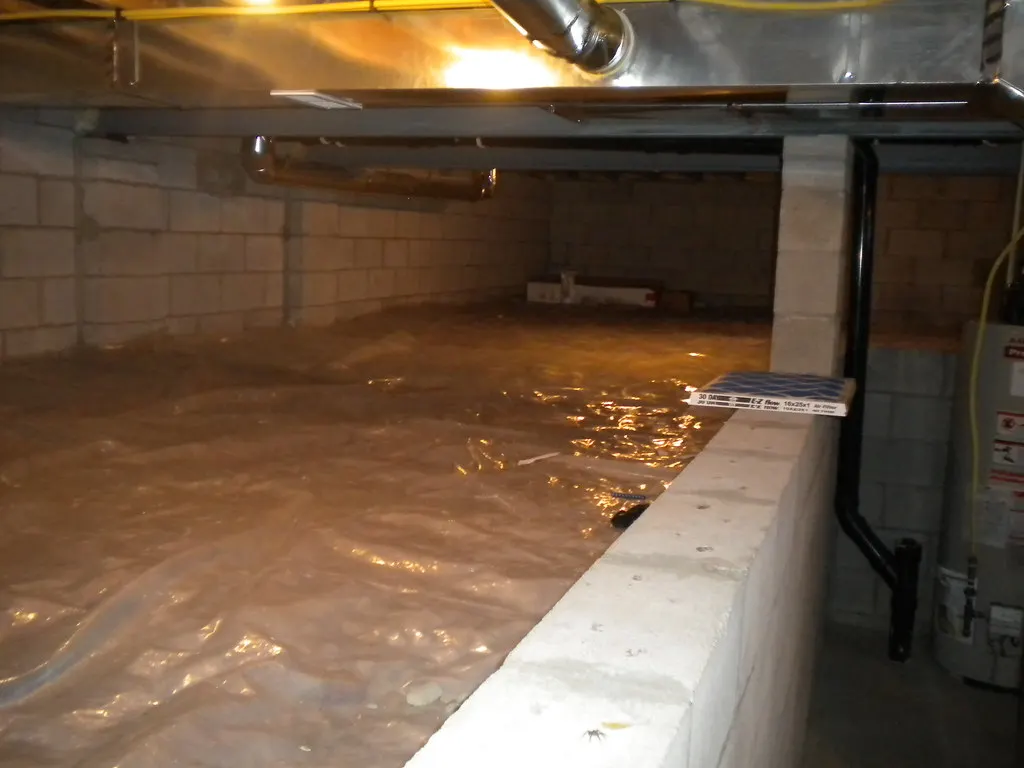
Signs your vapor barrier needs work
- No ground cover at all, just bare dirt
- Thin plastic that's torn, missing in spots, or pushed into piles
- Water or mud on top of the plastic after rain
- Damp soil or a damp smell even in dry weather
- Mold on the underside of the subfloor or joists
- Insulation that's damp or hanging down
What a proper vapor barrier looks like
Not all vapor barriers are the same. Here's what a proper install includes:
- A thicker, reinforced liner that holds up to being crawled on, instead of thin plastic that tears.
- Full coverage of the ground, with no gaps around piers or along the edges.
- Overlapped and taped seams, so moisture can't sneak up between sheets.
- Liner run partway up the walls and fastened, depending on the plan, so the edges stay put.
A vapor barrier on its own covers the ground. It doesn't seal vents or the walls, and it doesn't control humidity in the air. That's the difference between a vapor barrier and full crawl space encapsulation.
Vapor barrier or full encapsulation?
This is one of the most common questions homeowners ask, and the honest answer is "it depends."
A vapor barrier may be enough if:
- Your crawl space stays fairly dry, with no standing water
- There's little or no mold
- Ducts and pipes don't sweat in summer
- Humidity readings are only slightly high
Full encapsulation is usually the better choice if:
- Ducts sweat or insulation is wet in summer
- There's active mold on the wood
- Humidity stays high even with a ground cover
- You want the most complete, long-term fix
Some homeowners start with a vapor barrier and add sealing and a dehumidifier later. That's a reasonable path, and a good quote lays out both options.
How the work goes
- Free inspection. The contractor checks moisture, humidity, the wood, and the existing ground cover, and takes photos.
- Written quote. You get a clear quote with the liner type, coverage, and price.
- Prep. The crew removes old plastic and debris and rakes the ground smooth where they can.
- Install. The new liner goes down, seams are overlapped and taped, and edges and piers are handled.
- Walk-through. The installer shows you photos of the finished job.
Most vapor barrier jobs take one day. Larger or tighter crawl spaces may take two.
What it costs
A vapor barrier on its own costs less than full encapsulation, since the walls and vents aren't sealed. Square footage, crawl space height, liner thickness, and how much prep is needed set the price. Your real price comes from a free on-site inspection and a written quote. See the cost guide for more.
What a good contractor won't do
A good contractor won't lay new plastic over standing water and call it fixed. If water is collecting in your crawl space, the drainage problem comes first. A liner on top of a puddle just hides the puddle.
Questions people ask
How thick should a crawl space vapor barrier be?
Thicker and reinforced liners hold up much better than thin plastic, especially if anyone will ever crawl around on it for plumbing or HVAC work. Your quote should explain the liner options and why the contractor recommends one over another for your crawl space.
Is a vapor barrier the same as encapsulation?
No. A vapor barrier covers the ground to stop soil moisture. Encapsulation goes further by also lining the walls, sealing vents and the access door, and controlling humidity, usually with a dehumidifier.
Can I install a vapor barrier myself?
Some homeowners do. The hard parts are getting full coverage, sealing seams, and working around piers in a tight space. If you DIY it, use a thick liner, overlap and tape every seam, and don't cover standing water.
How long does a crawl space vapor barrier last?
A good, thick liner that's installed well and not torn up by foot traffic can last many years. Thin plastic tends to tear and shift much sooner. Keeping water out of the crawl space also helps the liner last.