Standing water in a crawl space is different from humidity. Humidity is moisture in the air. Standing water is an actual puddle, or a muddy floor that never quite dries out. If you've opened your crawl space after a heavy rain and seen water, drainage is the first thing to fix. Everything else, from a vapor barrier to a dehumidifier, works better once the water is under control.
Why water ends up under Statesville homes
Red clay is the main reason. Clay soil drains slowly, so after a summer storm the water sits in the ground around your foundation instead of soaking away. That water follows the easiest path, and sometimes that path leads under your house.
Other common causes:
- Downspouts that dump water right at the foundation
- Clogged or overflowing gutters that pour water down the side of the house
- Grading that slopes toward the house instead of away from it
- A crawl space floor that sits lower than the soil outside
- High water in the soil during wet seasons
Usually it's a combination. Fixing the outside first is often cheaper than fixing the inside.
Signs you have a drainage problem
- Puddles or standing water in the crawl space after rain
- Mud, water lines, or silt marks on the ground or walls
- Water pooling on top of an existing vapor barrier
- Efflorescence, a white chalky residue, on block walls
- Soil washing out near the foundation outside
- Gutters that overflow in heavy rain
Drainage options
The fix should match the source. Here's what that can include:
Gutter and downspout fixes
Clearing gutters, adding downspouts, and extending them so water lands well away from the foundation. This is often the simplest and least expensive part of the job, and sometimes it's all you need.
Grading fixes
Reshaping the soil around the house so it slopes away from the foundation. In red clay, a little slope makes a big difference.
Interior drains
A drain channel along the inside of the foundation wall or across the low spots of the crawl space. It collects water and carries it to a sump pump.
Sump pumps
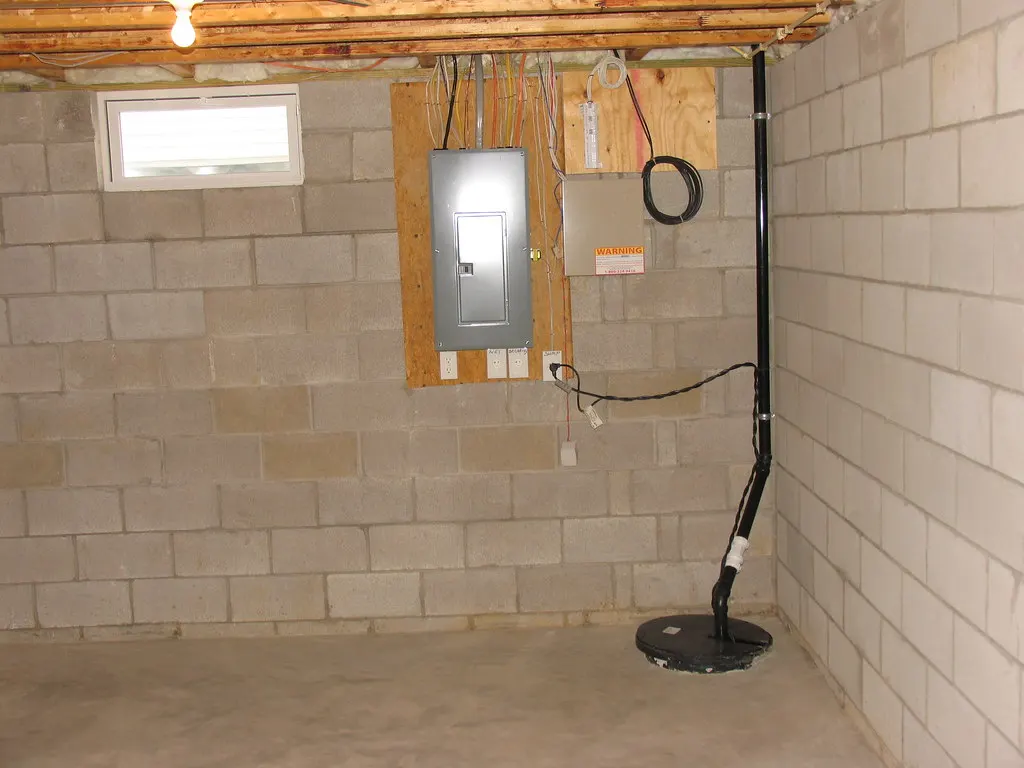
A pit and pump set at the low point of the crawl space. When water collects, the pump sends it out and away from the house through a discharge line.
Before any digging outside, the contractor calls NC811 so buried utility lines are marked. That's standard practice.
How the work goes
- Free inspection. The contractor looks inside and outside, checks the gutters and grading, and finds where the water comes in.
- Written quote. You get a plan that starts with the simplest fixes and lists the interior work if it's needed, with prices for each.
- The work. Outside fixes often take a day. Interior drains and a sump pump usually take one to three days.
- Walk-through. The crew shows you how everything works, where the water goes, and how to check the pump.
What it costs
Drainage work covers a wide spread. A gutter and downspout fix is usually the least expensive way to go. An interior drain with a sump pump across a larger crawl space is a bigger job, and the length of drain, the clay, and the power hookup all play in. Your real price comes from a free on-site inspection and a written quote. The cost guide has more detail.
What a good contractor won't do
A good contractor won't sell you an interior drain and pump if extending two downspouts and regrading one side of the house will fix the problem, and won't put a new liner over standing water. Once drainage is handled, a vapor barrier or full crawl space encapsulation can keep the space dry for the long haul. If water has been sitting for a while, the wood should also be checked for rot, with a look at floor joist repair if needed.
Questions people ask
Do I need a sump pump in my crawl space?
Only if water collects under the house and outside fixes can't stop it. Many crawl spaces dry out once gutters, downspouts, and grading are corrected. If water still comes in, a sump pump gives it a way out.
Where does the sump pump water go?
Through a discharge line that carries the water outside and away from the foundation, so it doesn't just soak back in. Ask the installer to show you the exit point.
What happens if the power goes out?
A standard sump pump won't run without power. If your crawl space takes on a lot of water during storms, ask about battery backup options in your quote.
Can I fix crawl space water with gutters alone?
Sometimes, yes. Gutters and downspouts that dump water at the foundation are one of the most common causes. A good contractor looks at the outside first and tells you if that's enough.