If you've bought an older house in Statesville, there's a fair chance the crawl space came with extras. A pile of leftover bricks by the access door. Rolls of old carpet. Three generations of plastic sheeting, none of it covering the ground anymore. Maybe a broken water heater someone slid under there instead of hauling it off. A cleanout gets all of it out.
Why clear it out at all
It's tempting to leave it. Out of sight, out of mind. But a cluttered crawl space causes real problems.
It hides damage. Junk sitting on the ground covers soil that may be wet, and stacked material blocks the view of piers, walls and framing. An inspector can't check what they can't see.
It feeds moisture and rot. Wood scraps, cardboard and carpet on damp red clay soak up water and start to rot. Rotting material draws termites, which then go looking for the house framing.
It gives pests a home. Mice, rats, snakes and insects like cover. A crawl space full of debris is ideal for them.
It gets in the way of every repair. Nobody can lay a new vapor barrier, run drain line, add support piers or encapsulate a crawl space until the floor is clear.
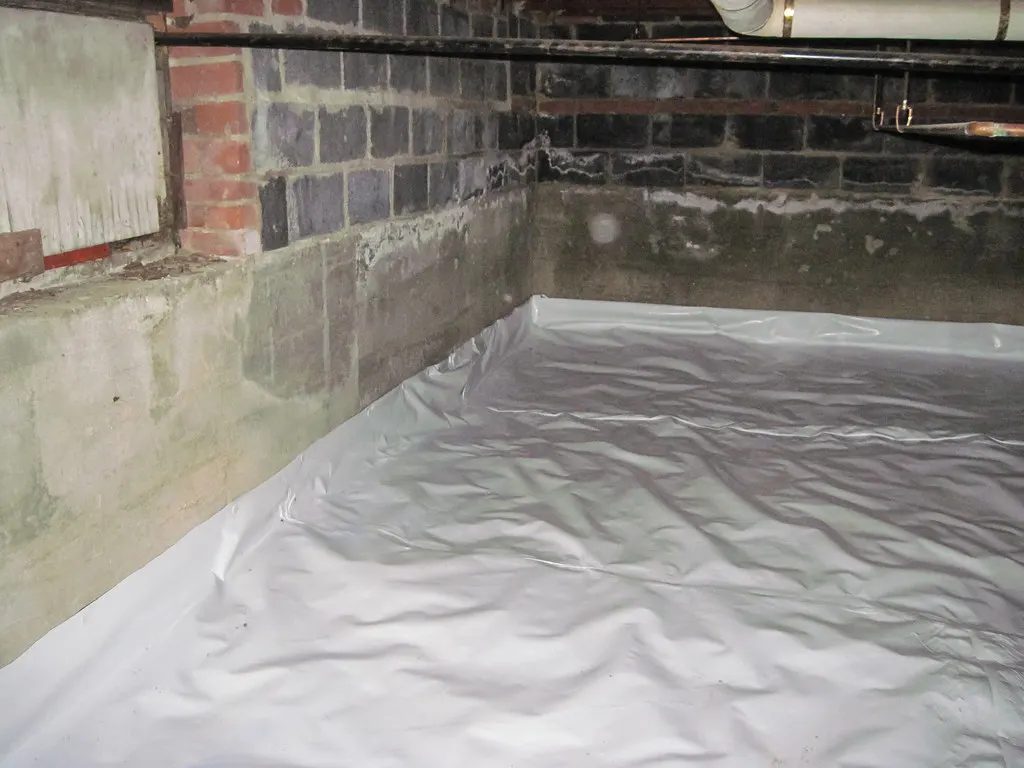
What a cleanout includes
Every crawl space is a little different, but a full cleanout usually covers:
| Material | What happens to it |
|---|---|
| Old plastic and ground cover | Pulled up, bagged and hauled off |
| Fallen or wet insulation | Removed and bagged, especially if moldy or nested in |
| Construction leftovers | Lumber, block, brick, drywall and trash carried out |
| Abandoned ductwork and equipment | Disconnected pieces removed |
| Stored items | Removed or returned to you, your call |
| Animal droppings and nests | Removed with protective gear, area sanitized |
| Soil surface | Raked smooth so the next layer lies flat |
Pest contamination needs extra care
Droppings and nesting material from rodents shouldn't be swept up casually. Stirring up dust in a closed space is the problem. Crews doing this work should use proper respiratory protection, wet down or carefully bag contaminated material rather than sweeping it, and sanitize the area afterward.
A cleanout also turns up how the animals got in. Broken vent screens, gaps where pipes and lines pass through the foundation, and a loose access door are common entry points. Ask the contractor to point them out. Sealing them keeps the space clean. If there's an active infestation, especially termites, a licensed pest control company should treat it.
What turns up once it's clear
Clearing a crawl space often reveals things nobody knew were there: a slow drain leak, termite tubes on a pier, a block wall with a crack, soft wood along the sill. That's useful information. After a cleanout, the contractor walks you through photos of anything found. If wood is damaged, subfloor and rot repair may be the next step. If walls are cracked, that goes on the list too.
How the work goes
- Free inspection. A crew member goes under, photographs what's there and notes anything that needs special handling.
- Written quote. It lists what's being removed, disposal, any sanitizing and whether it's part of a bigger job.
- Cleanout day. Debris gets bagged and dragged to the access door. In a low crawl space, it's done lying down, a few feet at a time. Most cleanouts take a day. Very full spaces can take two.
- Before and after photos. You see what came out and what the space looks like clear.
What it costs
A cleanout is priced on how much material there is, how heavy or wet it is, how low and tight the crawl space is, how far it has to be carried to the door, and whether pest contamination means extra gear and sanitizing. Disposal fees are part of it. When a cleanout is done as the first step of encapsulation or a vapor barrier job, it's often bundled into one quote. The cost guide explains how that works.
What a good contractor won't do
- Lay new plastic over old debris to save a step
- Leave bagged trash in your yard
- Skip showing you what they found once the space was clear
The contractor serves Statesville and nearby areas like Troutman, Harmony and Mooresville.
Questions people ask
Do I need a cleanout before getting a vapor barrier or encapsulation?
Almost always. Debris, old plastic and fallen insulation have to come out so the new liner lies flat and doesn't get punctured. Most encapsulation quotes include it, but make sure it's listed.
Can I store things in my crawl space after it's cleaned?
It's best not to store cardboard, wood, paper or fabric down there, since they hold moisture and attract pests. In an encapsulated crawl space, sealed plastic bins set on the liner are sometimes fine. Ask the contractor first.
What if there's a dead animal under the house?
Let the contractor know when you call. It's removed with protective gear, and the area is cleaned and sanitized. Finding out how the animal got in is part of keeping it from happening again.
How long does a crawl space cleanout take?
Most take one day. A crawl space that's very full, very low or heavily contaminated by pests can take longer. The written quote should include a time estimate.