Look at the inside of the block walls in a lot of Statesville crawl spaces and you'll see a story written in stains. A dark band near the bottom where the block stays damp. A white, powdery crust that flakes off when you touch it. A tide line on one wall that shows how high the water got after the last big storm. Those marks are the foundation telling you water is coming through it.
Three jobs that get confused
Crawl space moisture gets lumped together, but there are really three different problems, and each has its own fix.
| Problem | What it looks like | The fix |
|---|---|---|
| Water coming through the walls or foundation | Damp block, efflorescence, seepage lines, wet soil along the walls | Waterproofing (this page) |
| Water collecting on the floor | Puddles, mud, standing water after rain | Crawl space drainage and sump pumps |
| Humid air and ground vapor | Musty smell, sweating ducts, damp wood with no visible water | Crawl space encapsulation and dehumidifiers |
Plenty of houses have more than one. The order matters: water first, then air.
Where water gets through
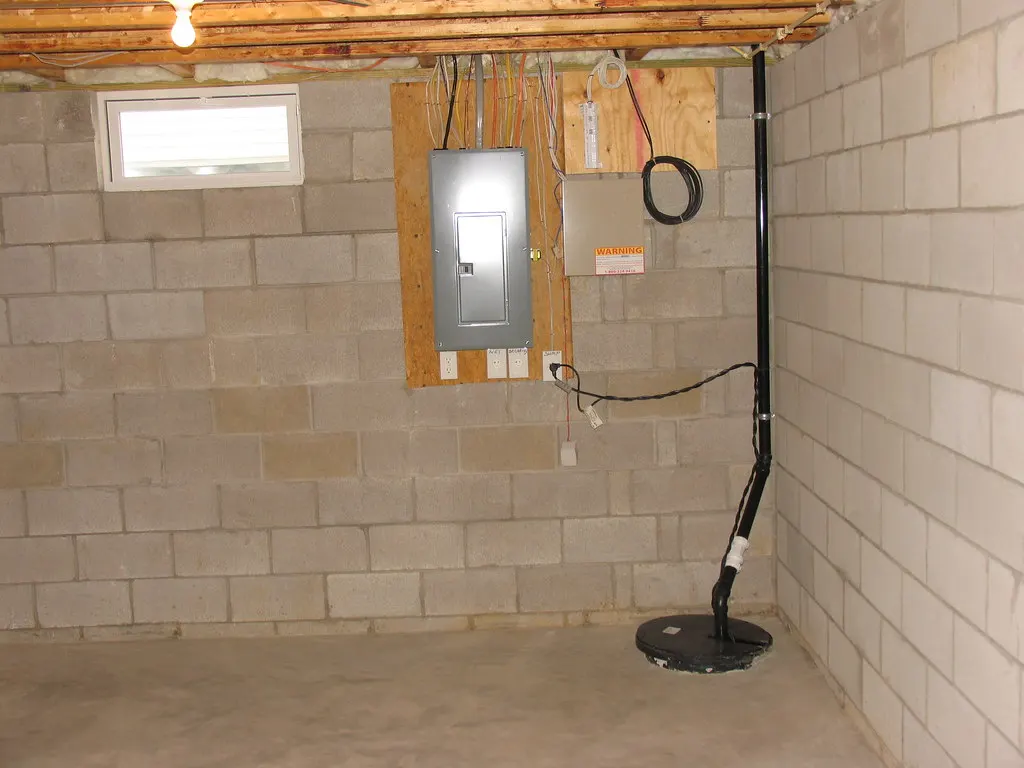
Statesville's red clay holds rain against the foundation for days. With the soil soaked, water looks for weak spots, and a crawl space wall has several.
The block itself. Concrete block is hollow and porous. Under steady wet soil, water soaks into the cores and wicks through to the inside face. That's where the dark patches and efflorescence come from.
Mortar joints. Old mortar gets soft and cracks. Water moves through those joints faster than through the block.
Cracks. Any crack in the wall, even a stable one, is a path for water.
Penetrations. Places where pipes, wires, the dryer vent or the AC line pass through the wall are often sealed poorly or not at all.
Vents and the access door. Vents set low to the ground, or with soil and mulch piled up against them, let surface water pour straight in during a storm.
The top of the wall. Where soil outside sits too high on the foundation, water can run in over the top of the block or soak the sill.
How to find the entry points
A good inspection doesn't stop at "it's wet down here." The inspector looks for the pattern. Is the dampness on one wall or all four? Low on the wall or near the top? Near a downspout or a pipe? Worse after storms, or steady all year? They also walk the outside of the house to check soil height, grading and where the gutters drain. Photos inside and outside get matched up so you can see the cause and the effect.
Waterproofing methods
The fix should fit the entry point.
Outside the wall
- Lowering soil and mulch so there's visible foundation below the siding and vents
- Regrading so the ground falls away from the house
- Fixing gutters and extending downspouts
- On some walls, digging along the outside and applying a waterproof coating or membrane to the block, then backfilling. This is the most thorough approach and also the most disruptive, so it's used selectively.
Inside the wall
- Waterproof coatings brushed or sprayed on the inside of the block to slow seepage
- Drainage membrane, a dimpled plastic sheet fastened to the wall that lets water run down behind it to a drain at the base
- Repointing soft or missing mortar
- Sealing cracks and penetrations around pipes and lines
At the openings
- Vent wells or covers for low vents
- A tight, sealed access door
- Sealing gaps around pipes and lines that pass through the wall
When water reaches the floor anyway, an interior drain and sump pump handle it. That part is covered on the drainage page.
How the work goes
- Free inspection. Inside and outside, with photos of where the water shows up and where it's likely coming from.
- Written plan. Outside fixes first, with interior work listed separately so you can see what each part does and costs.
- The work. Outside grading and gutter fixes often take a day. Interior wall work, membranes and sealing take one to three days depending on wall length and clearance. Digging starts with an NC811 call so utilities are marked.
- Check after rain. A good contractor will want to know how the space looks after the next real storm.
What it costs
The price depends on how many walls are involved, which methods are used, how much outside work is needed, and how much room the crew has to work. Outside fixes are usually the least expensive part. Exterior excavation is the most. The cost guide explains how a written quote is put together.
Plain talk
If water has been pushing on a block wall for years, look at the wall itself. Horizontal cracks or a wall that leans in can mean foundation repair is needed along with the waterproofing. A good contractor will tell you if they see it, and won't seal over a wall that's still moving.
The contractor serves Statesville, Troutman, Olin, Cool Spring and nearby areas.
Questions people ask
What is the white powder on my crawl space walls?
That's efflorescence, minerals left behind when water passes through masonry and evaporates. It's not harmful by itself, but it's a clear sign water is moving through the wall. It usually returns until the water is stopped.
Do I need waterproofing or a sump pump?
It depends where the water is. If walls are seeping, waterproofing addresses that. If water pools on the floor, a drain and sump pump move it out. Many crawl spaces need some of both, and the inspection will show which.
Can I paint my block walls with waterproof paint?
Interior coatings can slow seepage, but they don't stop water pressure from outside, and paint on a wet wall often peels. Fixing grading and gutters first, and choosing the right interior treatment, works better.
Will waterproofing get rid of humidity in my crawl space?
Not by itself. Waterproofing stops liquid water. Humid air and ground vapor are handled with a vapor barrier, encapsulation or a dehumidifier. Once the walls are dry, those work much better.