You notice it walking through the kitchen. A dip in the floor, a spot that gives a little, a cabinet door that doesn't close the way it used to. Floors that sag or feel soft are one of the most common reasons people finally look under their house, and the fix is usually more straightforward than they fear.
What causes sagging floors
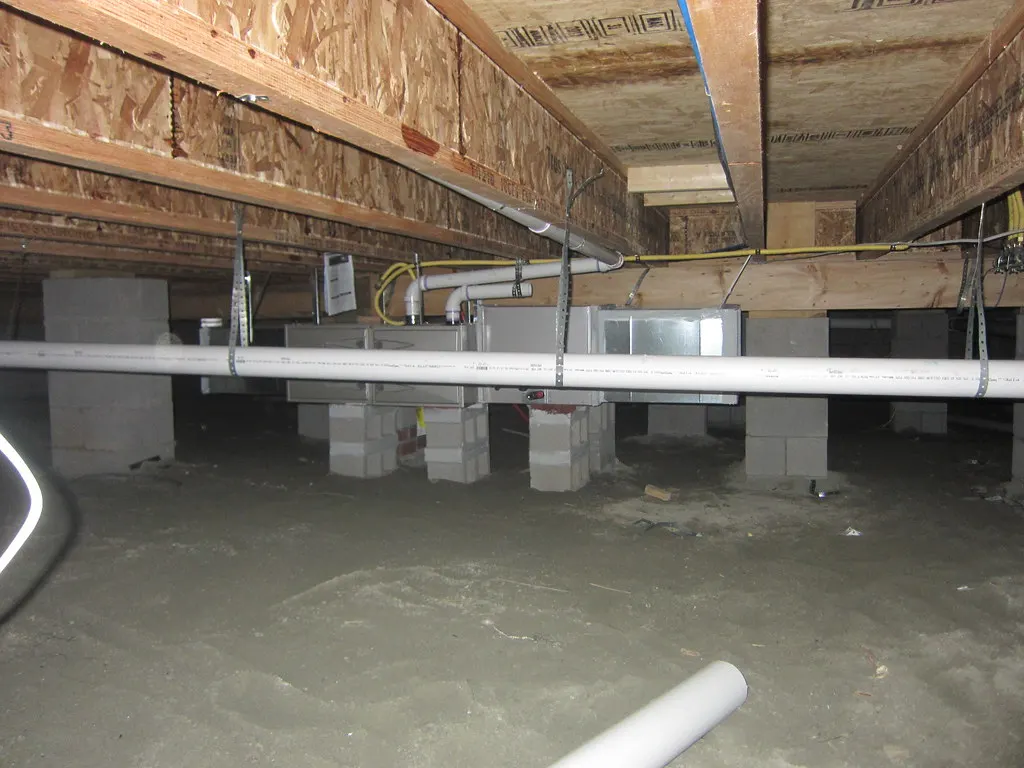
Floors rest on joists, the wooden framing that runs under the subfloor. Joists sit on beams, and beams sit on piers. When any part of that chain weakens or settles, the floor above shows it.
The most common causes around Statesville:
- Moisture and rot. Years of damp crawl space air soften the wood, especially near the ends of joists and along the sill.
- Joists spanning too far. Some older homes have joists that stretch farther than they should between supports.
- Settling piers. Red clay that swells when wet and shrinks when dry can let piers shift over time.
- Notched or cut joists. Past plumbing or HVAC work sometimes cuts into joists.
- Added weight. Heavy items like a large tub, a piano, or stone counters over a weak spot.
- Insect damage. Termites and other wood-boring pests often show up where the wood is damp.
Signs you need joist repair
- Floors that dip, slope, or sag in one area
- A bouncy or springy feeling when you walk
- Soft spots that give under your foot
- Cracks in drywall or tile above a weak area
- Doors and cabinets that stick or won't latch
- Gaps between the floor and baseboards
- Wood under the house that's dark, crumbly, or soft when probed
Repair options
The right fix depends on what's wrong. Here are the main tools contractors use.
Support jacks
Adjustable steel supports placed under a beam or joist line to add support where the span is too long or a pier has settled. They're set on a proper footing and adjusted to lift the floor gradually.
Sistered joists
A new piece of lumber fastened alongside a weak, cracked, or cut joist. Sistering restores strength without tearing out the floor above.
Rot repair
When wood is too far gone, the crew removes and replaces the damaged sections of joists, sill plates, or beams. This is more involved and is priced after the wood has been probed.
Leveling
Floors that have sagged for years are brought up slowly, a little at a time. Lifting too fast can crack drywall and tile upstairs. The contractor should explain what to expect.
Plain talk: fix the moisture too
If your joists rotted because the crawl space was damp, replacing wood without fixing the moisture just restarts the clock. A good contractor looks at what caused the damage and tells you whether you need a vapor barrier, drainage, or full crawl space encapsulation to protect the repair.
For larger structural repairs, a permit may be required. When it is, the contractor pulls it.
How the work goes
- Free inspection. The contractor checks the floor upstairs, then goes under the house to probe the wood, check the beams and piers, and measure the sag.
- Written quote. The cause, the repair, and the price are explained in writing, with photos.
- The work. Most support jack and sistering jobs take one to three days. Rot repair can take longer.
- Walk-through. The crew shows you the repairs and explains any adjustments that may be needed as the floor settles in.
What it costs
Joist and support repair varies more than almost any other crawl space job. A few support jacks under one room is a fairly contained job. Extensive rot repair across a large area is a much bigger one. Nobody can tell which you have until the wood is probed. Your real price comes from a free on-site inspection and a written quote. See the cost guide for more.
Questions people ask
Are sagging floors dangerous?
Most sagging floors aren't an immediate danger, but they usually get worse over time, and the cause, often moisture or rot, keeps working. If a spot feels very soft or you see a sudden change, have it looked at soon.
Can sagging floors be leveled completely?
Often they can be brought much closer to level, but floors that have sagged for many years may not go back perfectly flat without risking cracks above. The contractor should tell you what's realistic for your house.
What's the difference between sistering and replacing a joist?
Sistering adds a new board alongside the old one to restore strength. Replacing removes the damaged wood entirely. Sistering is common when the joist is weakened but not badly rotted.
Do support jacks need adjustment later?
Sometimes. As a floor settles onto new supports, a small adjustment may be needed. The crew should explain whether that applies to your repair at the walk-through.