Sometimes it starts with a gap: a pier that doesn't quite touch the beam anymore, or a block wall with a crack you could slide a coin into. Sometimes it starts upstairs, with a bedroom door that now drags on the frame. Either way, the question is the same. Is the foundation moving, and how much does it matter?
Statesville Crawl Space Pros connects homeowners with a local contractor who goes under the house, measures what's there, and tells you straight whether it's an old crack to keep an eye on or movement that needs fixing now.
How a crawl space foundation is built
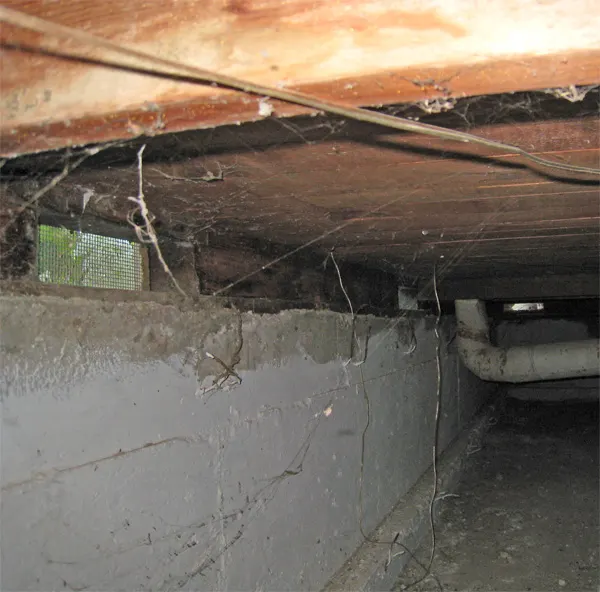
It helps to know the parts. A typical crawl space foundation in Iredell County has three:
- Footings. Concrete strips poured in the ground that spread the weight of the house into the soil.
- Perimeter walls. Usually concrete block, sometimes brick, built on the footings around the outside of the house.
- Piers. Block or brick columns in the middle of the crawl space that hold up the main beams.
When a footing settles, a wall gets pushed or a pier sinks, the framing above follows, and you see it in the floors, doors and drywall.
Reading the cracks
Not every crack means the same thing. Here's a rough guide. It's a starting point, not a diagnosis.
| What you see | What it often points to |
|---|---|
| Thin vertical crack, same width top to bottom | Shrinkage or old settling, often stable |
| Stair-step crack along mortar joints | A corner or section of footing settling |
| Horizontal crack partway up a block wall | Soil pressure pushing the wall in |
| Wall bulging or leaning inward | Ongoing soil or water pressure |
| Pier tilting, cracked or pulled away from the beam | Pier footing sinking or undersized |
| Crack wider at the top than the bottom | One end of the wall dropping |
What matters most is whether it's still moving.
Why Statesville foundations move
The red clay around Statesville is the main player. Clay swells when it gets wet and shrinks when it dries. Through a hot, dry August and a wet spring, the soil under and beside your footings grows and shrinks over and over. That slow push and pull is behind a lot of the stair-step cracking in older block foundations.
Water makes it worse. Wet clay against a wall is heavy, and it pushes. Overflowing gutters, downspouts that dump at the corner and a yard sloping toward the house keep the clay soaked. Many older houses near downtown and brick ranches in the neighborhoods around town have had decades of that.
Piers have their own story. Some sit on small footings, or on soil that stayed wet from a leak. One sinking pier can put a dip in the middle of a room.
Repair options
The right repair depends on what's moving and why.
Wall stabilization. For block walls that bow or lean, the options include wall anchors through the wall into the yard, steel beams braced from footing to floor framing, and carbon fiber straps bonded to the block. The goal is to stop the wall where it is. Some walls can be brought back a bit over time.
Wall rebuilding. A section that has moved too far, or is badly broken, may need to be taken down and rebuilt while the house is supported.
Pier repair. A settled pier can be rebuilt on a new, larger footing, or reinforced with a new support beside it.
Underpinning. When the soil under a footing can't carry the load, steel piers can be driven or screwed down to firmer ground to support it. This is the biggest repair on the list, and the contractor should explain why simpler options won't work.
Crack and mortar repair. Stable cracks get sealed, and crumbling mortar gets repointed.
For bowing walls and underpinning, a structural engineer's evaluation is common, and a permit is often required. When it is, the contractor pulls it.
Water control is part of the repair
Stabilizing a wall without dealing with the water that pushed it is a half fix. Expect the plan to include outside work like gutters, downspout extensions and grading, plus crawl space waterproofing or crawl space drainage if water is getting through the walls. Any digging outside starts with a call to NC811 so utilities get marked.
Foundation problem or floor framing problem?
A dip in the floor can come from a sinking pier (foundation) or from weak, cut or rotted joists (framing). The fixes are different. If the masonry is sound and the floor still sags, floor joist repair is usually the answer. A free crawl space inspection checks both and shows you the photos.
What it costs
Foundation repair covers a wider range than any other crawl space job. Sealing and repointing a few stable cracks is small. Anchoring a long wall or underpinning a corner of the house is large. Price depends on how many walls or piers are involved, the method, how much digging is needed, crawl space clearance, and engineering or permits. The cost guide explains how quotes come together.
What a good contractor won't do
- Sell underpinning when rebuilding one pier fixes the problem
- Seal over a crack without checking whether it's still moving
- Skip the water problem that caused the damage
The contractor serves Statesville and nearby communities including Troutman, Harmony and Stony Point.
Questions people ask
How do I know if a foundation crack is still moving?
Mark both ends of the crack with a pencil and the date, then check it every few weeks. If it grows longer or wider, it's active. A contractor can also measure walls for lean and look for fresh breaks in the mortar.
Why do piers under my house sink?
Usually the footing under the pier is too small or the soil under it got wet and soft. Leaks, poor drainage and red clay that swells and shrinks all play a part. Rebuilding the pier on a proper footing is a common fix.
Can I stay in my house during foundation repair?
In most cases, yes. Work on crawl space walls and piers happens under and outside the house. There may be noise, digging in the yard and short periods when the floor is being supported, but most people stay home.
Will foundation problems come up when I sell?
Very likely. Home inspectors look at foundation walls and piers. Getting it looked at and repaired on your own schedule, with photos and a written record, usually goes better than handling it during a sale.