Here's a common call. A homeowner in Statesville pulls up the old bathroom vinyl to put in new tile and finds the plywood underneath is dark, soft and coming apart in layers. Or a home inspector on a sale writes "deteriorated sill plate at rear wall, recommend evaluation." Either way, there's rotted wood under the house, and someone needs to figure out how far it goes.
Subfloor, sill, rim and joists: what's what
It helps to know what's being talked about, because each piece is a different repair.
- Subfloor. The plywood, OSB or old board layer your flooring sits on. It spans across the joists.
- Sill plate. The board bolted to the top of the foundation wall. Everything else sits on it.
- Rim joist (band). The framing that runs around the outside edge of the floor, sitting on the sill.
- Joists and beams. The framing that holds up the floor across the room.
This page is about the first three. If your floor sags or bounces across a room, that's usually the joists or beams, and it's handled under floor joist repair.
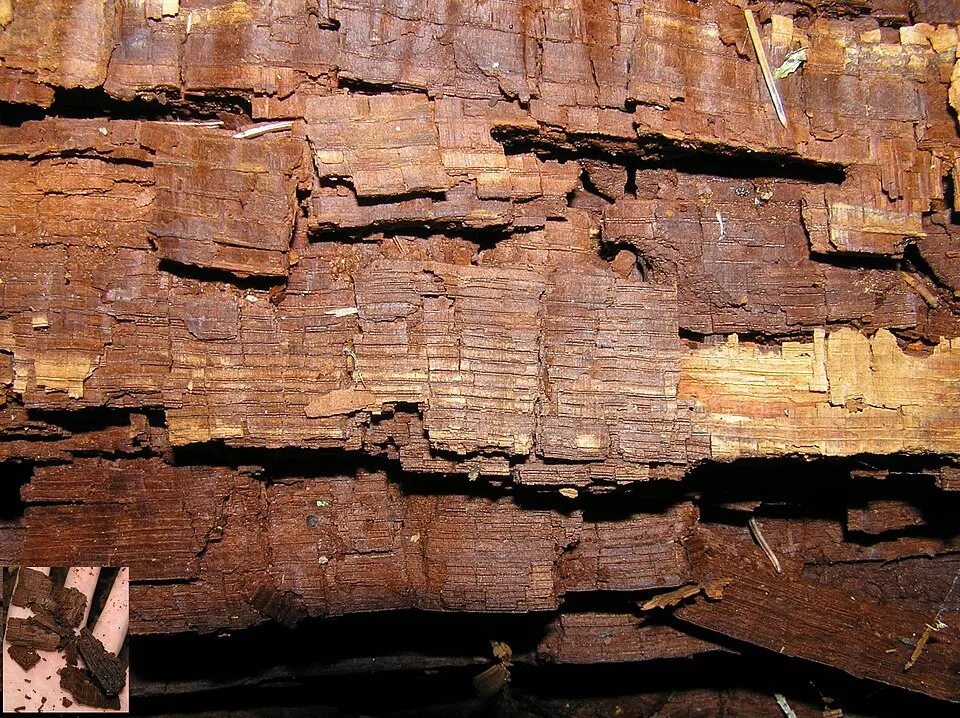
Where rot turns up
Bathrooms. Toilets, tubs and showers are the top spot. A wax ring that's slowly leaking, a cracked tub drain or worn grout around a shower lets water soak into the subfloor a little at a time. The floor gets soft near the base of the toilet or along the front of the tub.
Kitchens and laundry rooms. Dishwasher lines, ice maker lines, sink drains and washing machine hoses all leak eventually. Subfloor under them can rot without a drop showing upstairs.
Exterior walls and doors. Rain splashing against the house, leaky door thresholds and windows, and soil piled too high against the siding soak the sill and rim. Back doors and the areas under old decks are frequent spots.
Anywhere damp for years. In a humid crawl space, wood near the ground or near cold ductwork can stay wet enough to rot.
Termite damage
Termites are common in the Piedmont, and they like damp wood. Look for mud tubes running up the foundation walls or piers, wood that sounds hollow when tapped, or wood that crumbles to show packed soil inside. If termites are active, a licensed pest control company treats them before any wood is replaced. Otherwise, the new lumber is just their next meal.
How the damage gets measured
Rot can look small from the surface and run deep. During a free inspection, the contractor:
- Checks the floor upstairs for soft spots, cracked tile and loose fixtures
- Goes under the house and probes the subfloor, sill and rim with an awl or screwdriver
- Looks for staining, mold, termite tubes and the source of the water
- Photographs everything, so you can see the damage and its cause
From that, you get a written quote that says what's being replaced, how and what caused it.
Repair methods
Reinforcing from below. When the damage is limited, new plywood or blocking can be fastened to the joists from the crawl space to firm up the area.
Replacing from above. Larger sections of rotted subfloor are cut out and replaced from the top. That means pulling up the flooring, and sometimes the toilet, vanity or tub. It's more work, but it's the only way to reach wood that's too far gone.
Sill and rim replacement. The house is held up with temporary support while the rotted section is cut out and replaced with pressure-treated lumber, then re-fastened to the foundation.
Sistering at the edges. Where joist ends are soft where they sit on a rotted sill, they may need reinforcement too. The quote should list that separately.
Stop the water
Every rot repair needs an answer to "why did this get wet?" That could be a plumbing fix, re-caulking a tub, a new door threshold, lowering soil outside, or bringing down humidity with a vapor barrier or encapsulation. If you see mold on the wood around the rot, crawl space mold removal may be part of the plan.
What it costs
Rot repair depends on how much wood is involved, whether it can be reached from below, what flooring and fixtures have to come out and go back, and the clearance under the house. Finish flooring upstairs may be a separate cost, so ask that the quote spell it out. See the cost guide for how quotes are built.
Plain talk
A good contractor won't patch new plywood over rotted wood and call it done, and won't replace the wood without telling you where the water came from. If the damage is less than you feared, they'll say so.
The contractor serves Statesville, Troutman, Stony Point, Olin and nearby areas.
Questions people ask
How do I know if my subfloor is rotted?
Soft or spongy spots, especially near toilets and tubs, are the most common sign. Cracked tile, a toilet that rocks, or flooring that bubbles can also point to it. From the crawl space, rotted subfloor looks dark and stained and is soft when probed.
Do I have to remove my tile to fix the subfloor?
If the damaged area is large or the wood is badly rotted, usually yes, because the bad wood has to come out. Small areas can sometimes be reinforced from below without disturbing the floor above.
Can a home inspector's note about sill rot hold up a sale?
It can come up in negotiations. Getting the area inspected with photos and a written quote gives buyers and sellers something concrete to work with, instead of guessing.
Is rotted wood under the house dangerous?
Small areas usually aren't an emergency, but rot spreads while the wood stays wet, and a soft spot under a tub or toilet can get worse. Have it checked soon so the repair stays small.