Finding mold under your house is unsettling, but it's also very common, especially in a humid place like Statesville. The good news is that crawl space mold is usually a surface problem on the wood, and it can be treated. The key is fixing why it grew, not just cleaning what you can see.
Why mold grows in crawl spaces
Mold needs three things: moisture, something to feed on, and mild temperatures. A crawl space under a Statesville home often has all three.
- Moisture. Our red clay soil holds water after storms, and summer air is humid. In vented crawl spaces, that warm, wet air condenses on cooler wood.
- Food. Wood joists, the subfloor, and paper-faced insulation give mold plenty to grow on.
- Temperature. Crawl spaces stay mild for most of the year.
Older homes on vented crawl spaces tend to see the most of it, but it turns up in newer homes too, often where a downspout dumps water near the foundation or the ground cover is thin.
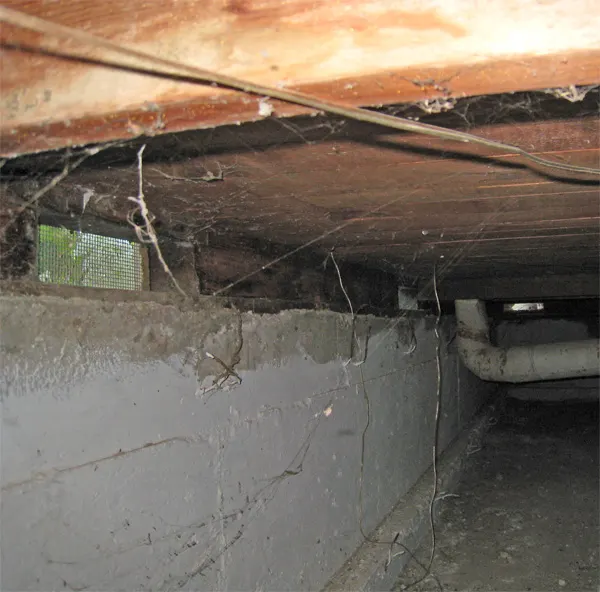
Signs of crawl space mold
- White, gray, green, or black fuzzy spots on joists or the subfloor
- Dark staining that spreads along the wood grain
- A musty, earthy smell in the house, worse on humid days
- Damp or sagging insulation between joists
- Wood that feels damp or looks dark compared to the rest
- Allergy-type complaints that get worse indoors
Not every stain is active mold. Some is old staining from a past moisture problem that has since dried out, and some is just dirt or water marks from when the house was built. Active growth usually looks fuzzy or raised and tends to show up where the wood stays damp. A good inspector tells you what they see and takes photos so you can see it too.
How crawl space mold gets handled
- Free inspection. The contractor looks at how much mold there is, where it is, and what's causing the moisture. They check humidity, the ground cover, vents, ductwork, drainage, and the wood itself.
- Written quote. You get a written plan covering the mold treatment and the moisture fix, priced out clearly.
- Prep. The crew removes debris and any wet or moldy insulation that can't be saved.
- Treatment and cleaning. Affected wood is treated and cleaned to remove active growth. Methods depend on how much there is and the condition of the wood.
- Moisture fix. This is the part that keeps it from coming back. Depending on your crawl space, that might be a vapor barrier, a crawl space dehumidifier, drainage work, or full encapsulation.
- Walk-through. The crew shows you before and after photos and explains what to watch for.
Most mold treatment jobs take one to two days, plus whatever time the moisture fix needs.
Plain talk: treating mold alone isn't a fix
Some companies will spray the joists, hand you a bill, and leave. If the crawl space is still damp, the mold will be back in a season or two. A good contractor won't do mold work without also addressing the moisture, or at least telling you clearly what's causing it and what it would take to fix. You can decide when to do that part, but you'll know.
What it costs
Mold treatment is priced on what the inspection finds. The size of the crawl space, how much wood is affected, how much insulation has to come out, and access all affect the price. The moisture fix is usually listed as its own line so you can see both parts clearly. Your real price comes from a free on-site inspection and a written quote. See the cost guide for more.
What to ask any contractor
- What's causing the mold, and how will you fix that?
- What method will you use to treat the wood?
- Will you remove damaged insulation, and is that included?
- Is any of the wood soft or rotted, and does it need floor joist repair?
- What will keep the mold from coming back?
Questions people ask
Is crawl space mold dangerous?
Crawl space mold can affect indoor air and contribute to musty smells and allergy-type symptoms for some people. It can also be a sign of moisture that will damage wood over time. If anyone in the home has health concerns, talk with your doctor. The contractor's job is to remove the mold and fix the moisture behind it.
Can I just spray bleach on the mold myself?
Bleach doesn't soak into wood well and doesn't fix the moisture. You may lighten the stains, but the mold often returns. The lasting fix is treating the wood properly and drying out the crawl space.
Will the mold come back after treatment?
Not if the moisture problem is fixed. That's why mold treatment should always be paired with a moisture fix, or at least a clear plan for one.
Does mold mean my floor joists are rotten?
Not always. Mold often grows on the surface of wood that's still solid. But long-term moisture can lead to rot, so the inspector should probe the wood and tell you if any of it needs repair.